


Fast, Reliable HVAC Cleaning Across Camp Swift
HVAC cleaning in Camp Swift typically runs $280–$650 for a full system service, with most jobs completed in a single visit. Douglas and the Nova team travel to Camp Swift from our Austin base, usually arriving within 45–60 minutes for scheduled appointments along Highway 21 and the surrounding Bastrop County roads. We’ve built our reputation in this area by understanding something most duct cleaners don’t: Camp Swift’s unique combination of post-wildfire rebuilds, aging rural housing stock, and the Lost Pines microclimate creates HVAC contamination patterns you won’t find in standard Central Texas service guides. If your system hasn’t been professionally cleaned in the past three years — or if you’re still catching whiffs of smoke when the compressor kicks on — call us at (833) 315-4216 for a free estimate.
Why Nova Air Duct Cleaning Service Austin Is Camp Swift’s Preferred HVAC Cleaning Company
More than 1,255 homeowners have reviewed our work, averaging 4.9 stars across the board. That volume of feedback matters because it reflects real jobs in real houses — including dozens of HVAC Cleaning appointments we’ve completed in the Camp Swift area, from the post-fire rebuilds near the old base perimeter to the ranch properties off FM 20.
Douglas Ross doesn’t delegate to crews he’s never met. As owner and lead technician, he’s the one pulling Rotobrush hose through your trunk lines and inspecting your evaporator coil with a borescope. Eight years focused on one trade means we’ve seen exactly how Camp Swift’s dual-pollen seasons and summer humidity load stress residential systems differently than homes in Austin’s urban core.
Our response time to Camp Swift averages under an hour for standard bookings, and we carry professional-grade Rotobrush and Nikro equipment plus Honeywell and Aprilaire replacement components on every truck. No waiting for parts orders that stretch a one-day job into a week-long ordeal.
Our HVAC Cleaning Services in Camp Swift
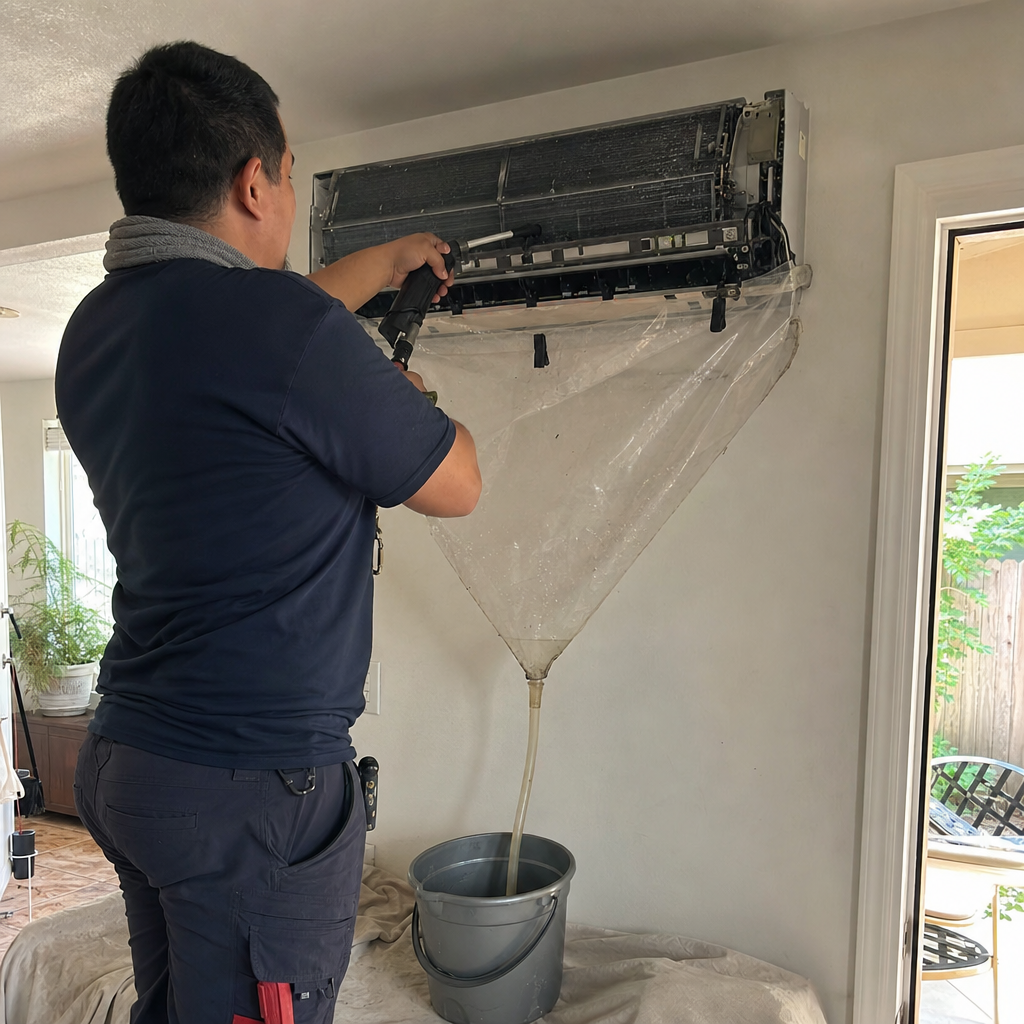
Evaporator Coil Cleaning
The evaporator coil in your Camp Swift home works harder than most Texans realize. Between December and February, Ashe juniper pollen cakes the fins. Come March, loblolly pine pollen from the Lost Pines forest adds a second layer. By July, that compressed debris restricts airflow so severely your compressor risks slugging liquid refrigerant. We remove the coil assembly when accessible, clean with foaming degreaser and low-pressure rinse, then verify temperature drop across the coil. For homes near the 78602 ZIP code with post-2012 rebuilds, we often find construction dust mixed with pollen — a combination that standard filter changes never touch.
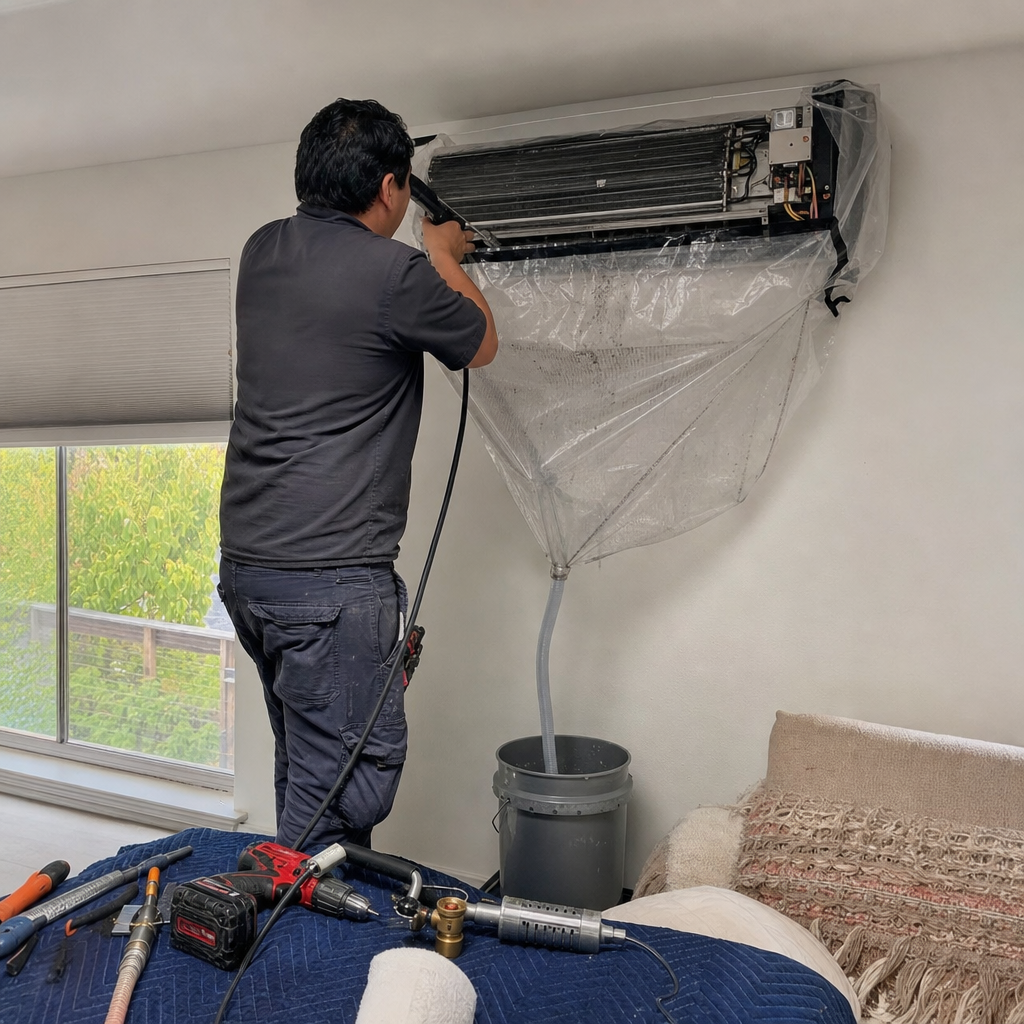
Blower Cleaning
Your air handler’s blower wheel moves every cubic foot of conditioned air through your Camp Swift home. When pine pollen and wildfire ash particulate bypass the filter, they adhere to the blower fins and throw the wheel out of balance. The result is vibration, bearing wear, and airflow that feels “weak” at the registers despite the fan running full speed. We remove the blower assembly, clean each fin individually, and check amp draw against manufacturer specs. In older manufactured homes near Camp Swift with original 1980s air handlers, this single service often restores airflow the homeowner assumed was lost to “just how these old systems are.”
Condenser Cleaning
The outdoor condenser coil faces a brutal environment in Camp Swift. Summer humidity combines with cottonwood fluff, pine needles, and red Bastrop County dust to insulate the coil and spike head pressure. We use foaming cleaner and a fin comb, working from the inside out to avoid packing debris deeper. For properties near the Lost Pines subdivision with mature post-fire landscaping, we’ve found condensers partially buried in mulch or crowded by fast-growing loblolly saplings — both airflow killers we flag during service.
Air Handler Cleaning
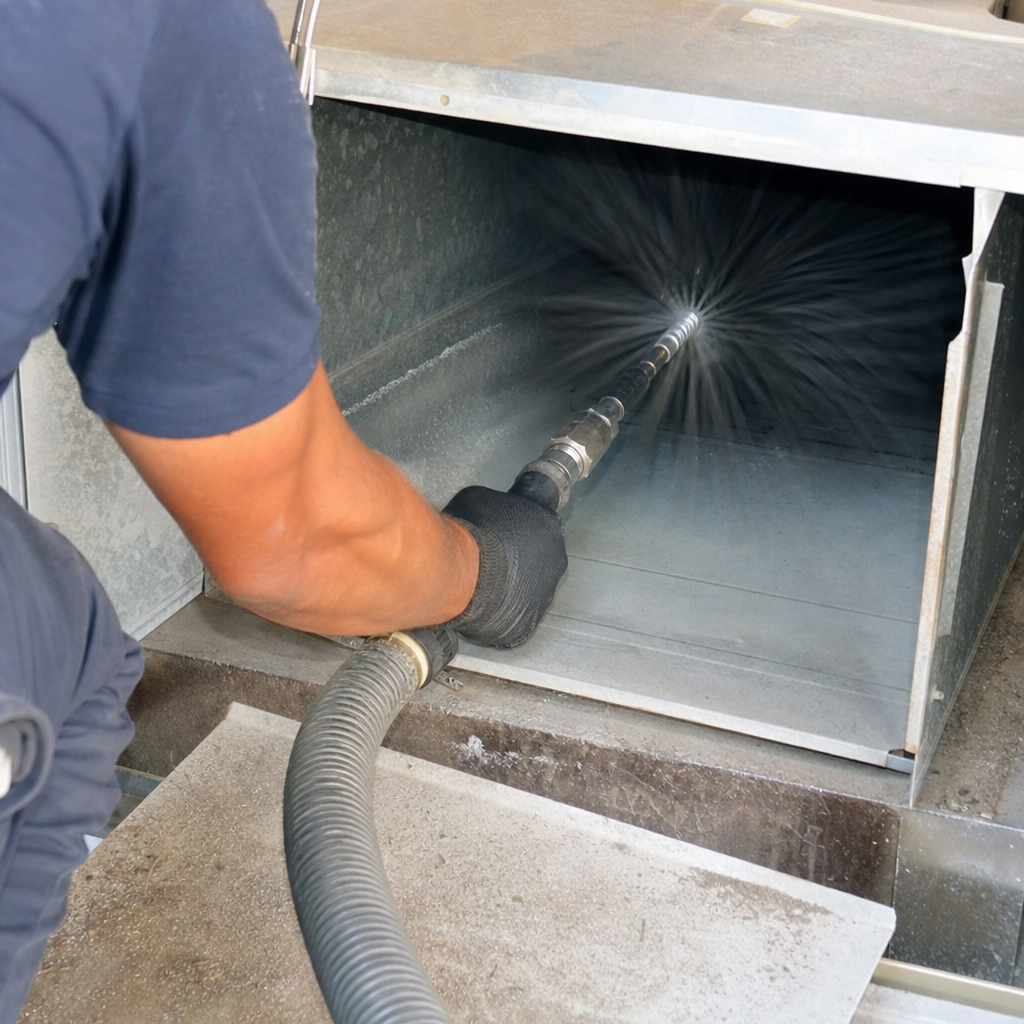
The air handler cabinet is where your Camp Swift home’s air quality battle is won or lost. We clean the entire interior — drain pan, cabinet walls, filter rack, and return plenum — then treat with Guardsman antimicrobial where moisture staining indicates biological growth. In the Lost Pines microclimate, high summer humidity plus unsealed flex duct joints common in 1970s–1990s ranch homes creates conditions for mold colonization we don’t see in drier Hill Country locations. Our air handler cleaning includes inspection of those critical junction points.
Coil Treatment
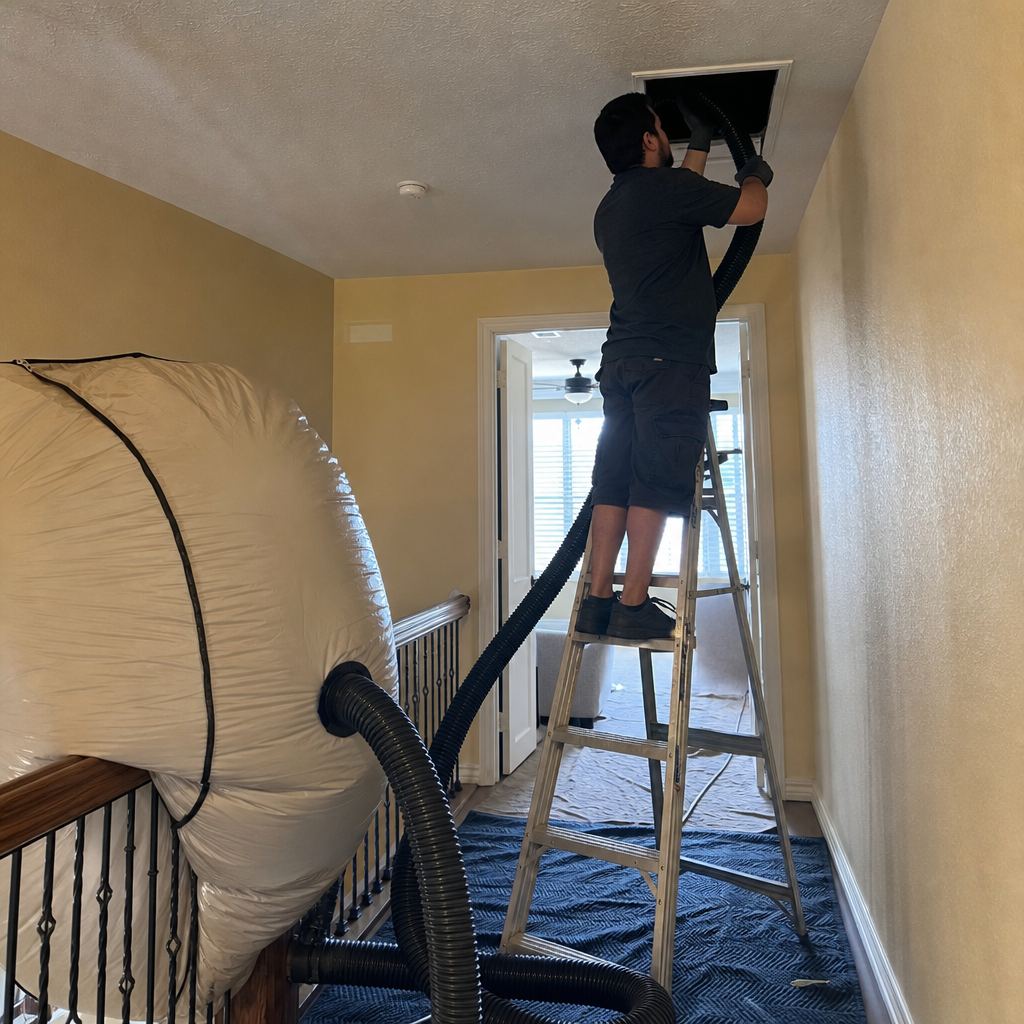
This is where Camp Swift’s wildfire history demands specialized attention. Standard coil cleaning removes debris; our coil treatment addresses embedded particulate that standard processes miss. For homes that survived the 2011 Bastrop Complex Fire, soot particles can remain lodged in the coil’s micro-fins, reactivating odor when summer heat drives maximum airflow. We apply Abatement Technologies treatment products specifically formulated for soot abatement, neutralizing residual ash particles that basic cleaning leaves behind. In the Lost Pines subdivision off Highway 21, we cleaned the ductwork of a 2015 post-fire rebuild where construction dust had settled in the flex ducts and the Aprilaire media filter was caked with loblolly pine pollen. We used a Rotobrush with HEPA filtration and applied a coil treatment to neutralize residual ash particles.

What happens when you call
- 1
A real person answersNo phone trees — you reach a local pro.
- 2
You get an upfront price rangeHonest numbers before anyone is dispatched.
- 3
A background-checked tech heads outLicensed & insured, dispatched right away.
- 4
You approve before work beginsNothing starts until you say go.
Trusted Brands We Service in Camp Swift
We stock components and cleaning agents from Honeywell, Aprilaire, and Abatement Technologies on every service vehicle — not because it sounds impressive, but because Camp Swift homeowners can’t afford a two-day delay waiting for a coil treatment or media filter to ship from Austin. When your AC is laboring through a July afternoon near the old Camp Swift base perimeter and we discover a clogged Aprilaire 2400 media cabinet or a Honeywell electronic air cleaner with failed cells, we replace or clean on the spot. Guardsman antimicrobial treatments for mold-prone systems in the humid Lost Pines microclimate are also carried standard. This parts-ready approach means most Camp Swift HVAC cleaning jobs finish in one visit, not two.
Common HVAC Cleaning Problems We See in Camp Swift Homes
- Wildfire soot reactivation in summer heat. Homes that survived the 2011 Bastrop Complex Fire often retain smoke odor in ducts that reactivates when the AC runs hard in July and August. Standard filter changes fail to remove soot embedded in duct lining — specialized soot-abatement cleaning is required.
- Construction debris in post-fire rebuilds. Tract and custom homes rebuilt 2012–2016 near Camp Swift frequently have residual drywall dust, wood particulate, and insulation fragments hidden in trunk lines. High-CFM systems installed in these newer homes stir up debris that homeowners mistake for “dusty Camp Swift air.”
- Mold in aging flex duct joints. Rural ranch-style and manufactured homes from the 1970s–1990s feature unsealed flex duct connections that leak conditioned air and allow humid Lost Pines microclimate air to infiltrate. Summer humidity above 70% promotes mold growth at these junction points that cleaning alone won’t prevent — we identify and recommend sealing.
- Dual-pollen filter overload. The combination of December–February cedar pollen and March–April loblolly pine pollen overwhelms standard 1-inch fiberglass filters in Camp Swift homes. Upgraded media filtration, properly fitted, is often the difference between annual coil cleaning and quarterly emergencies.
Pricing for HVAC Cleaning in Camp Swift, TX
| Service | Typical Range in Camp Swift |
|---|---|
| Evaporator coil cleaning | $180–$340 |
| Blower cleaning (removed and hand-cleaned) | $150–$280 |
| Condenser coil cleaning | $120–$220 |
| Air handler cabinet cleaning with antimicrobial treatment | $200–$380 |
| Full HVAC system cleaning (all components) | $480–$720 |
| Coil treatment for soot/ash remediation | $95–$165 (add-on) |
What moves you within these ranges? Accessibility matters — air handlers in Camp Swift attics during July can require additional safety protocols. The degree of contamination matters more: a blower with six years of pollen buildup takes longer than one maintained annually. Post-fire soot remediation adds steps standard cleaning doesn’t include. We quote upfront after inspection, not after we’ve started work. Every estimate is free — call (833) 315-4216 to schedule.
We Also Serve Cities Near Camp Swift
Our service radius extends naturally along the Highway 290/71 corridor and north through the Blackland Prairie. We regularly handle HVAC cleaning in Bastrop for historic district homes with updated systems, Elgin for rural properties on well water with mineral-scale coil issues, Manor for newer construction with tight ductwork needing initial cleaning, and Hornsby Bend for homes near the Colorado River floodplain with humidity-driven mold concerns. Camp Swift remains a focal point due to its unique wildfire history and the concentration of post-2012 rebuilds now reaching critical maintenance age.
Serving Camp Swift, TX — Our Local Coverage Area
We’re based in the Camp Swift area and know this community well. Use the map below to see our service coverage — if you’re nearby, we can almost certainly help.
FAQs — HVAC Cleaning in Camp Swift
Yes — but only if the service includes soot-abatement coil treatment and HEPA-filtered duct cleaning, not just standard brushing. The odor comes from particulate embedded in the evaporator coil fins and duct lining that reactivates with heat and airflow. Douglas and the Nova team use Rotobrush HEPA systems and Abatement Technologies treatments specifically for this scenario, which we’ve encountered repeatedly in Camp Swift’s fire-survivor homes. Call (833) 315-4216 for an inspection — estimates are free.
More common here than in drier Central Texas areas, yes — specifically in the Lost Pines microclimate where summer humidity stays elevated and older homes have unsealed flex duct joints. We find mold staining in air handler cabinets and at duct connections in 1970s–1990s ranch properties near Camp Swift about three times more often than in comparable Elgin or Manor homes. Our cleaning includes antimicrobial treatment and identification of leak points that need sealing to prevent recurrence.
Not automatically — many providers treat them as separate services. At Nova, we bundle evaporator coil cleaning with full HVAC system cleaning because a clean duct system blowing across a contaminated coil recontaminates immediately. For Camp Swift homes with heavy pollen loads or post-fire particulate, skipping the coil defeats the purpose. Ask specifically about coil inclusion when comparing quotes.
The post-2012 custom rebuilds near Camp Swift often feature zoned HVAC systems with multiple air handlers, media filtration cabinets, and tight building envelopes that concentrate any contamination. These systems demand methodical zone-by-zone cleaning and careful handling of electronic components. Douglas’s hands-on approach as lead technician ensures nothing gets rushed past — we’ve serviced homes in the Lost Pines area with five-figure air quality installations that require documented, careful handling.
For post-2012 rebuilds in Camp Swift, we recommend initial professional HVAC cleaning at 3–4 years after construction to clear residual building debris, then every 3–5 years thereafter based on occupancy and allergy sensitivity. Homes with fire-survivor ductwork that wasn’t replaced should be evaluated immediately for soot contamination, then maintained on a 2–3 year cycle due to the embedded particulate baseline. Call (833) 315-4216 and we’ll assess your specific situation — estimates are free.
Written by Douglas Ross, Owner at Nova Air Duct Cleaning Service Austin, serving Camp Swift and the greater Austin area since 2016.