
Honeywell Air Duct Cleaning in Austin: A Homeowner’s Guide
Honeywell doesn’t clean air ducts—there’s no such service from the brand. What Honeywell does make are indoor air quality products like media filters, electronic air cleaners, and UV germicidal lights that work with your HVAC system. In Austin, where pollen counts spike in spring and summer dust storms push debris through every vent, those Honeywell products directly affect how dirty your ducts get and what a professional cleaning should address. If you’re trying to figure out whether your Honeywell-equipped system needs duct cleaning or filter upgrades, call us at (833) 315-4216 and we’ll walk you through it—estimates are free.
Here’s the mistake we see constantly: homeowners in Austin search “Honeywell air duct cleaning” thinking it’s a service tier from the manufacturer, or that owning a Honeywell air purifier means their ducts stay clean. Neither is true. We’ve been in hundreds of Austin homes—from Mueller’s new builds to the mature oak neighborhoods of Tarrytown—where expensive Honeywell filtration was working overtime because the ductwork itself hadn’t been cleaned in fifteen years. The equipment helps, but it can’t compensate for a system that’s circulating years of accumulated debris.
What Honeywell Actually Makes for Indoor Air Quality
Honeywell’s product line relevant to duct cleaning and air quality breaks into three categories. Understanding what each does—and doesn’t do—helps you make better decisions about maintenance timing and service scope.
Media filters are the thick, pleated replacements (typically MERV 11 to MERV 16) that sit in your return air grille or furnace cabinet. They trap particulate before it enters your HVAC system. A MERV 13 Honeywell filter catches pollen, mold spores, and fine dust—but it doesn’t stop everything, and it doesn’t clean what’s already coating your duct walls. In Austin, where cedar fever pollen is nearly invisible and prolific, even high-MERV filters load up fast during January and February peaks.
Electronic air cleaners use charged plates to attract and capture particles. Honeywell’s F300 series is common in local installations. These work well on smoke and ultrafine particles, but the cells need regular cleaning themselves—something many Austin homeowners overlook. When the electronic cell is dirty, airflow drops and the unit can actually become a source of contamination.
UV germicidal lights mount inside your HVAC cabinet or near the evaporator coil. Honeywell’s UV systems target mold and bacteria on wet coil surfaces—not airborne particles in your ducts. They don’t “clean” ductwork; they prevent biological growth on specific components. In Austin’s humidity, especially in homes near the Colorado River or with crawl space systems, this matters. But it’s a different function entirely from duct cleaning.
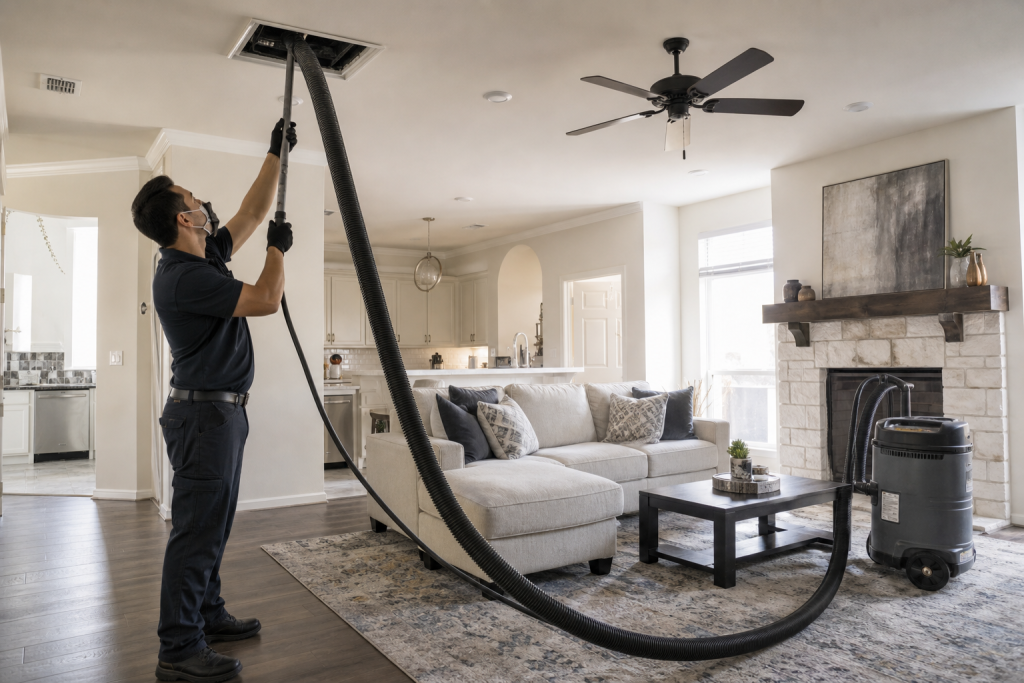
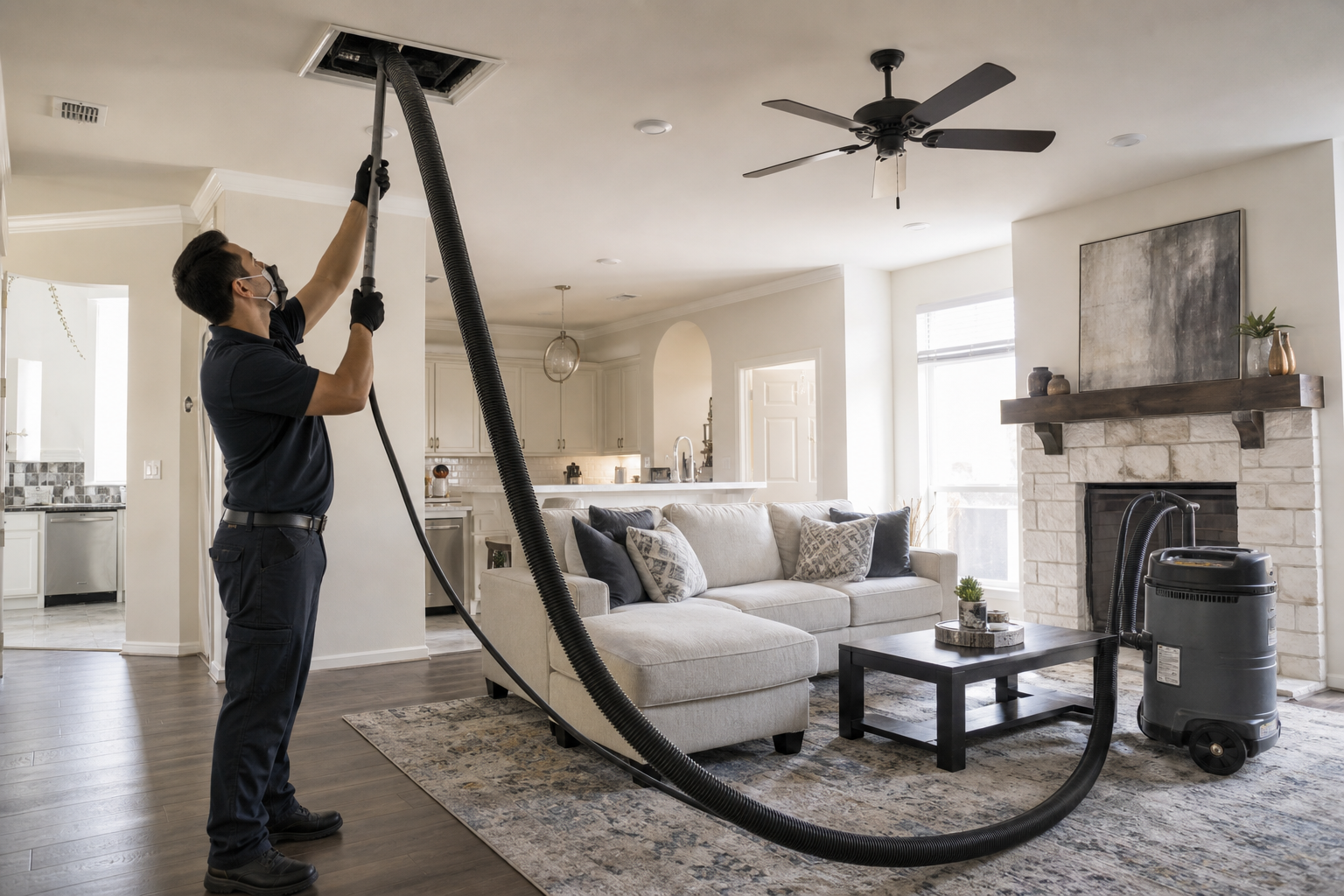
What none of these products do: remove the accumulated dust, construction debris, pet dander, and settled pollen that’s already lining your ductwork. That’s a mechanical cleaning job, and it’s what we handle with our Nova Air Duct Cleaning Service Austin home equipment.
How Honeywell Filtration Affects Your Duct Cleaning Schedule
This is where we can give you specific guidance based on what we’ve observed across Austin over eight years. The Honeywell filter you run directly changes how often your ducts need professional attention.
Here’s the pattern we’ve documented:
- Standard 1-inch fiberglass or low-MERV pleated filters: Duct cleaning every 3–5 years in Austin’s environment. These catch almost nothing fine, so your ductwork becomes a reservoir for everything the filter missed.
- Honeywell MERV 11–13 media filters: Duct cleaning every 5–7 years for most homes. The filtration upstream meaningfully reduces downstream debris accumulation. We see this in homes from Allandale to Circle C Ranch.
- Honeywell MERV 14–16 or electronic air cleaner with fresh media: Potentially 7–10 years between cleanings, assuming the filter is changed on schedule and the HVAC system is properly sealed. But—and this is critical—the ducts still need inspection because no filter is 100% efficient, and duct leaks bypass filtration entirely.
The compounding effect works both directions. Pair a fresh Honeywell filter upgrade with professional duct cleaning, and you’re starting from a genuinely clean baseline. We’ve had Austin customers in Steiner Ranch and the 78704 zip code tell us they noticed immediate air quality improvement after we cleaned their ducts and they switched to MERV 13 Honeywell media—more than either step alone produced.
Conversely, installing a high-MERV Honeywell filter on dirty ducts is like putting a clean air filter in a car with a clogged exhaust. The filter works harder, loads faster, and you don’t get the full benefit until the ductwork itself is clean.
What a Technician Should Check on Your Honeywell IAQ Equipment During Duct Cleaning
When we arrive for a duct cleaning in an Austin home with Honeywell components, our inspection includes specific checks that a cut-rate operator with a shop vacuum won’t perform. Douglas and the Nova team treat these as standard, not upsells.
Filter housing integrity: The gasket seal around your Honeywell media filter cabinet matters enormously. A 1/8-inch gap lets unfiltered air bypass the media entirely. We check for cracks in plastic housings—common in Texas heat—and verify the filter slides in without distortion.
Electronic air cleaner cell condition: If you have a Honeywell F300 or similar, we inspect the cell for broken ionizing wires, bent collector plates, and proper contact with the power head. A damaged cell draws power but doesn’t clean air. We’ve found cells in Austin homes that had been running “clean” lights for months with zero actual filtration happening.
UV lamp age and output: Honeywell UV bulbs degrade even when the blue glow is visible. After roughly 9,000 hours (about one year of continuous operation), germicidal output drops below effective levels. We note lamp age and recommend replacement timing—though we don’t sell lamps ourselves, so there’s no sales pressure in the assessment.
Duct pressure balance: High-MERV Honeywell filters increase static pressure. We verify your system isn’t working against itself with closed dampers or crushed flex runs, which is especially common in Austin’s older bungalow renovations where ductwork was adapted rather than properly designed.
Our professional-grade Rotobrush and Nikro equipment handles the mechanical cleaning. The Honeywell components tell us what your system has been dealing with and what maintenance intervals make sense going forward.
Why Your HVAC Brand Doesn’t Determine Cleaning Method
We get this question regularly in Austin: “I have a Honeywell system—do you need special equipment?” The answer is no, with one important caveat.
Honeywell doesn’t manufacture residential HVAC systems in the traditional sense. They make thermostats, IAQ components, and some packaged units, but your furnace or air handler is likely Carrier, Trane, Lennox, or another brand with Honeywell controls or add-ons attached. The ductwork itself is generic galvanized steel, flex duct, or duct board—same materials whether your thermostat says Honeywell, Ecobee, or anything else.
What actually matters for cleaning method:
- Duct material and age: Older fiberboard duct in Austin’s 1970s–1980s homes requires gentler agitation than metal. We’ve learned this from experience in neighborhoods like Rosedale and Brentwood where original ductwork is still in service.
- Duct sealing status: Unsealed ducts leak cleaning energy and recontaminate quickly. Our duct repair and sealing service addresses this.
- Contamination type: Dust and pollen respond to standard mechanical cleaning. Mold requires different handling. We assess before choosing approach.
- System accessibility: Some Austin attics are 140°F in August; others have been converted to conditioned space. Access affects what equipment we deploy.
The right questions to ask any duct cleaning provider—regardless of your equipment brand—are: What equipment do you use? (Rotobrush and Nikro are industry-standard; shop vacuums with long hoses are not.) Do you inspect the full system before quoting? Will you check my filtration setup? More than 1,255 homeowners reviewed us, and the feedback we value most comes from customers who asked hard questions before hiring.
Integrating Honeywell Upgrades with Professional Cleaning for Better Results
The Austin homeowners who see the most dramatic air quality improvement take a coordinated approach. We don’t sell Honeywell products, so this isn’t a pitch—it’s what we’ve observed works.
Step one: Professional duct cleaning to remove existing accumulation. This is our core service, performed with Rotobrush and Nikro systems. We clean the full supply and return network, plus the HVAC cabinet interior.
Step two: Seal duct leaks. Our duct repair and sealing service closes the bypass paths that let unfiltered attic or crawl space air into your system. In Austin’s climate, this also improves cooling efficiency measurably.
Step three: Upgrade filtration on the now-clean, sealed system. A Honeywell MERV 13 or higher media filter, properly fitted, now has a genuinely clean environment to protect. The filter lasts longer, performs better, and your ducts stay cleaner longer.
Step four: Establish a maintenance rhythm. For most Austin homes with good filtration, we recommend duct inspection every 3–4 years and cleaning every 5–7. Dryer vent cleaning happens annually—Austin’s lint buildup is real, and it’s a fire hazard we take seriously.
Related services in Austin: We also provide Air Duct Cleaning in Shady Hollow, Dryer Vent Cleaning in Shady Hollow, and HVAC Cleaning in Shady Hollow for homeowners in that growing southwest Austin community.
When to call a pro: If you can’t remember your last duct cleaning, if your Honeywell filter is black within weeks of replacement, if rooms have uneven airflow, or if anyone in your home has worsening allergy symptoms—these are signals that filtration alone isn’t enough. Eight years focused on one trade has taught us that the best Honeywell filter in the world can’t fix a duct system that’s been neglected for a decade.
The Bottom Line
Honeywell makes excellent indoor air quality products, but they don’t clean ducts—and no filter eliminates the need for periodic professional cleaning. In Austin’s challenging air quality environment, the smartest approach pairs Honeywell filtration with properly maintained ductwork, sealed to prevent bypass contamination. Start clean, filter well, and maintain on schedule.
Key takeaways:
- Honeywell filters, electronic cleaners, and UV lights improve air quality but don’t replace duct cleaning
- Higher-MERV Honeywell filtration extends cleaning intervals but doesn’t eliminate them
- Any duct cleaning visit should include inspection of your IAQ components, not just vacuuming
- Your HVAC brand doesn’t change cleaning method—duct material, condition, and contamination type do
- Coordinated cleaning + sealing + filtration upgrade produces compounding results
If you’re in Austin and want to know whether your Honeywell-equipped system needs cleaning, filter upgrades, or duct sealing, Nova Air Duct Cleaning Service Austin offers free estimates. Douglas and the Nova team will inspect your system, explain what we find, and quote only what you actually need. Call (833) 315-4216.
Frequently Asked Questions
No. Honeywell manufactures indoor air quality products like media filters, electronic air cleaners, and UV germicidal lights, but the company does not provide duct cleaning services. You’ll need a specialized duct cleaning company like ours in Austin to clean your ductwork. Call (833) 315-4216 for a free estimate— we’ll also check whether your Honeywell equipment is properly integrated with your system.
Duct cleaning in Austin typically runs $300–$600 for an average single-family home, regardless of whether you have Honeywell IAQ components. If your Honeywell electronic air cleaner or UV system needs servicing during the visit, that may add $50–$150. The presence of Honeywell products doesn’t change the cleaning method, but we do inspect them as part of our standard service. Call (833) 315-4216 for an exact quote—estimates are free.
No. Portable Honeywell air purifiers clean the air in a single room. Whole-house Honeywell media filters or electronic cleaners clean air passing through your HVAC system, but they don’t remove debris already stuck to duct walls. Both types leave existing duct contamination untouched. Professional mechanical cleaning is the only way to remove accumulated dust and debris from ductwork. If you’re in Austin and unsure whether you need cleaning or just better filtration, we can assess both—call (833) 315-4216.
With a properly maintained Honeywell MERV 13 or higher filter and no duct leaks, most Austin homes can go 5–7 years between professional duct cleanings. Without good filtration, that drops to 3–5 years. The filter reduces new debris entering the system, but it doesn’t address what’s already there or leaks that bypass filtration entirely. We recommend inspection every 3–4 years to confirm your interval. Schedule an inspection with Nova Air Duct Cleaning Service Austin at (833) 315-4216.
Written by Douglas Ross, Owner & Lead Technician at Nova Air Duct Cleaning Service Austin, serving Austin since 2018.
Need Air Duct Cleaning Help?
Call Nova Air Duct Cleaning Service Austin — licensed & insured, here with fast after-hours help in Austin.
(833) 315-4216