
Quick Summary
Accumulating Central Texas dust, pollen, and humidity can severely clog air conditioning components and spike utility bills, making professional hvac coil cleaning in Georgetown essential for restoring cooling capacity. Nova Air Duct Cleaning Service Austin provides specialized dual-coil treatments using aluminum-safe foaming agents to remove insulating grime, reduce compressor strain, and improve heat transfer efficiency. Homeowners will learn to recognize signs of neglected coils, evaluate local service costs, and request a free estimate or same-day appointment to restore system performance.
How Can HVAC Coil Cleaning in Georgetown Restore Your AC?
When an air conditioner runs non-stop through a 105-degree Central Texas afternoon but barely keeps the house below 78, clogged coils are usually the culprit. Scheduling professional hvac coil cleaning in Georgetown restores lost cooling capacity, drops indoor humidity, and takes immediate strain off your compressor. Research shows that keeping cooling coils clean delivers a 3.0% to 6.4% increase in heat transfer efficiency under wet operating conditions, giving your system the breathing room it needs to cycle properly.[3]
As specialists at Nova Air Duct Cleaning Service Austin note, Central Texas presents a specific set of challenges for cooling systems. Outdoor condenser units pull in heavy layers of spring oak pollen, cedar particles, and neighborhood construction dust. Meanwhile, indoor evaporator coils battle high humidity and recirculated household debris. Clearing these surfaces requires careful, low-pressure treatment using aluminum-safe cleaning solutions that loosen grime without bending delicate coil fins.
How Coil Cleaning Restores System Performance
Coil cleaning removes the insulating blanket of dirt and microbial growth that locks heat inside your home. In an air conditioning system, your indoor evaporator coil absorbs indoor heat into the refrigerant lines, and your outdoor condenser coil releases that heat into the outside air. When either coil is coated in grime, heat transfer stalls.
A U.S. Department of Energy filing highlighted that 87% of HVAC units examined in a Texas-related dataset had not been properly cleaned or maintained. When coils become neglected, blowers must work significantly harder to force air through tightly spaced fins, while compressors run longer cycles at dangerously high head pressures. Proper dual-coil cleaning restores unobstructed airflow, shortens run cycles, and lowers monthly electric draw.[1]
What Does HVAC Coil Cleaning Cost?
While exact costs vary based on local market rates and contractor pricing, standalone coil cleaning typically ranges from $175 to $400 for standard maintenance on accessible units. If an evaporator coil is heavily fouled and requires removal from the air handler (a “pull and clean”), or if the service is bundled with full duct sanitization, estimated costs generally range between $450 and $900.[4]
Service Comparison and Pricing Factors
| Service Type | Typical Price Range | Fin Safety Risk | Effectiveness on Stubborn Buildup |
|---|---|---|---|
| Quick Handyman Spray | $75 – $150 | High (Risk of pressure washer damage) | Low (Surface wash only) |
| Standard Maintenance Wash | $150 – $275 | Low | Moderate (Light dust and pollen) |
| Deep Chemical Clean & Flush | $275 – $450 | Controlled / None | High (Breaks down heavy grime) |
| Full Coil Pull & Air Duct Package | $500 – $950+ | Controlled / None | Complete restoration |
Factors That Affect Your Estimate
- System Accessibility: Condenser units on ground level take less labor than indoor evaporator coils wedged inside tight, unfloored attics common in older Georgetown neighborhoods.
- Level of Buildup and Grime: Coils that have not been serviced in several years often require multiple chemical applications and agitation rather than a quick rinse.
- Service Bundling: Combining coil washing with duct cleaning or dryer vent cleanouts reduces the total cost compared to booking separate visits.
Indoor Coil Maintenance and Environmental Factors
Need hvac coil cleaning in Georgetown?
We’re available now — call for a fast, free estimate.
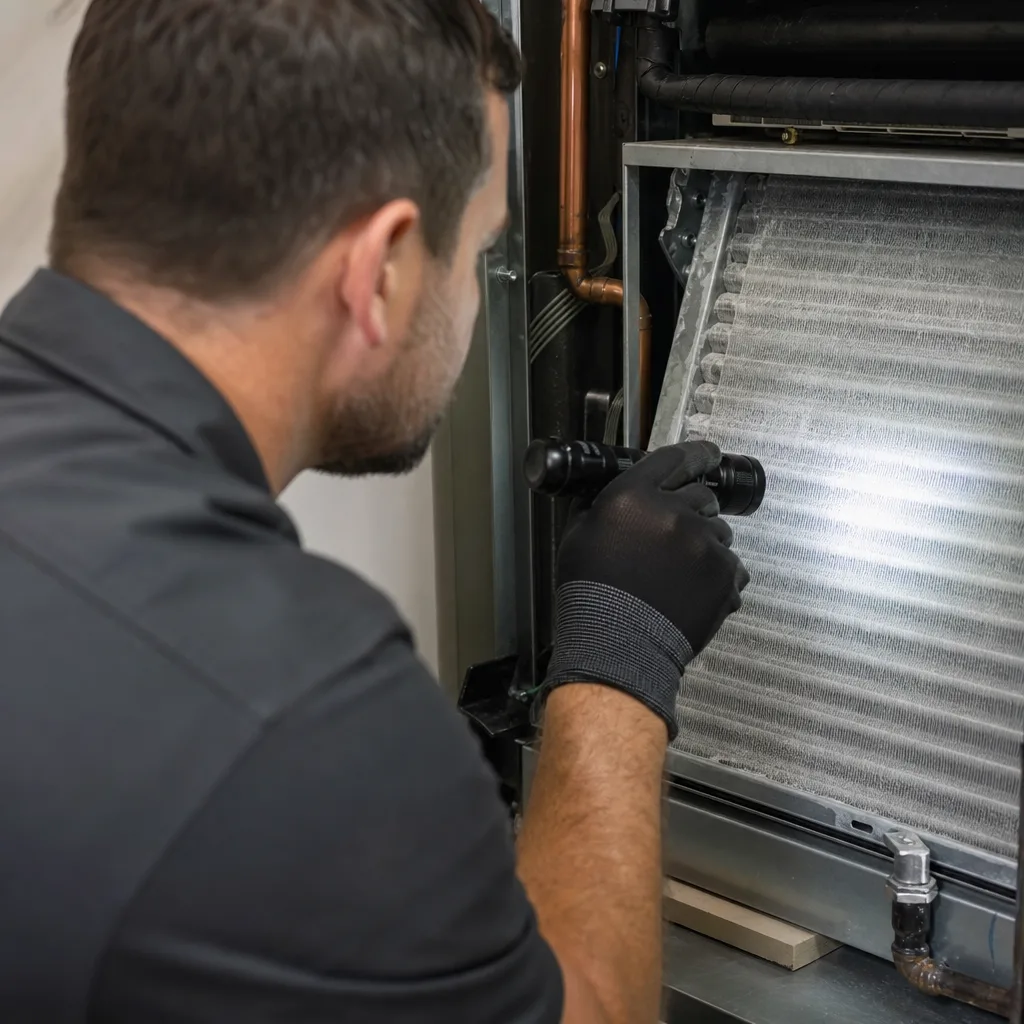
For long-term management of indoor coils, university research, including a Penn State project, has examined ultraviolet germicidal irradiation (UV-C) lamps installed near evaporator coils to prevent biological film from binding with airborne dust between deep cleanings.[2]
Evaporator Coils vs. Condenser Coils: Different Jobs, Different Hazards
Both coils are essential to the refrigeration cycle, but they encounter very different working conditions:
- Indoor Evaporator Coil: Located inside the air handler, this coil is cold and wet during cooling mode. It acts like a sponge for airborne pet dander and dead skin cells. When fouled, it breeds musty odor, restricts airflow to your registers, and can cause the indoor coil to turn into a block of solid ice.
- Outdoor Condenser Coil: Positioned in your yard, this coil is hot and dry. It pulls in ambient air along with grass clippings, pollen, leaves, and roadside grime. If dirt blocks the outer fins, heat cannot leave the refrigerant, causing compressor temperatures to spike and driving up your utility bill.
Warning Signs Your HVAC Coils Need Attention
Catching dirty coils early prevents emergency service calls in the middle of July. Look out for these common warning signs around your home:
- Second-Floor Rooms Will Not Cool: Weak airflow at your supply vents often points to an evaporator coil choked with debris, creating high static resistance in the duct system.
- Sudden Spikes on Electric Bills: Facilities Dive reported on peer-reviewed research showing cleaned HVAC systems saved an average of 41% to 60% on fan and blower energy in tested setups. When coils are caked with dirt, blowers pull excessive wattage just to move basic air volumes.
- Ice on Refrigerant Lines: If air cannot pass through the evaporator coil, the refrigerant inside stays too cold, causing condensation on the coil and copper lines to freeze solid.
- Musty “Dirty Sock” Smells: Stagnant water trapped against grime-coated fins creates a breeding ground for sour odors that blow into living spaces whenever the fan turns on.
Frequently Asked Questions About Georgetown HVAC Coil Cleaning
How much does HVAC coil cleaning cost in Georgetown, TX?
Depending on specific contractor rates and system conditions, typical coil cleaning costs generally range between $175 and $350 for dedicated dual-coil cleaning. Prices depend on whether the unit is easily accessible or tucked deep within a low-clearance attic, as well as the overall level of grime on the fins.
How often should AC evaporator and condenser coils be cleaned?
A general recommendation is to clean coils about once per year, with more frequent cleaning recommended only when systems run heavily or operating conditions are particularly dusty or humid.
Can dirty HVAC coils increase electricity bills and reduce cooling efficiency?
Yes. Even a thin layer of grime acts as an insulator, stopping refrigerant from shedding or absorbing heat. This forces your system to run longer cycles to meet your thermostat settings, as dirty coils reduce heat transfer and can increase energy use.[5]
Is professional HVAC coil cleaning better than DIY cleaning?
While homeowners can safely rinse light garden debris from outdoor condensers with a gentle garden hose, deep cleaning indoor evaporator coils requires professional service from experienced teams like Nova Air Duct Cleaning Service Austin. Technicians use commercial-grade, non-corrosive foaming products, capture wastewater cleanly inside attics, and avoid bending fragile aluminum fins with excessive water pressure.
How long does a professional HVAC coil cleaning service take?
A standard service covering both the indoor evaporator and outdoor condenser coils typically takes between 1.5 and 3 hours. If the indoor coil is severely neglected and must be pumped down and removed from the cabinet, the job can take 4 to 5 hours.
Need hvac coil cleaning in Georgetown?
We’re available now — call for a fast, free estimate.
Sources
- Effectiveness of an ultraviolet germicidal irradiation system in enhancing cooling coil energy performance in a hot and humid climate – pure.psu.edu (2016)
- Field measurement and modeling of UVC cooling coil irradiation for heating, ventilating, and air conditioning energy use reduction (RP-1738)—Part 1: Field measurements – pure.psu.edu (2018)
- [PDF] 1 Ultraviolet Germicidal Coil Cleaning: Impact on Heat Transfer … – scholar.colorado.edu
- 34 – citeseerx.ist.psu.edu
- Routine HVAC cleaning can lower energy use and help meet … – facilitiesdive.com
Hvac Coil Cleaning in Nearby Cities
We also serve the communities around Georgetown:
- Hvac Coil Cleaning in Austin
- Hvac Coil Cleaning in Anderson Mill
- Hvac Coil Cleaning in Bastrop
- Hvac Coil Cleaning in Bee Cave
- Hvac Coil Cleaning in Brushy Creek
- Hvac Coil Cleaning in Buda
- Hvac Coil Cleaning in Camp Swift
- Hvac Coil Cleaning in Cedar Park
Frequently Asked Questions
Can dirty AC coils cause permanent damage to my HVAC compressor?
Yes, heavily caked coils force the compressor to operate under dangerously high head pressures and sustained heat, leading to premature motor burnout. Scheduling professional hvac coil cleaning in Georgetown with Nova Air Duct Cleaning Service Austin relieves this excessive workload, extending the operating lifespan of your expensive compressor.
What should I do if my evaporator coil is already frozen into a block of ice?
Turn off your air conditioning immediately and switch the thermostat fan setting to 'ON' to safely thaw the ice without running the compressor. Once the unit thaws, contact Nova Air Duct Cleaning Service Austin for a same-day diagnostic and coil cleaning to clear the underlying airflow restriction.
How do technicians prevent water and chemical damage when cleaning indoor attic coils?
Specialists use aluminum-safe, non-corrosive foaming cleaners along with custom-fitted drain bibs and containment pans to capture all fluid runoff. This controlled process flushes away compacted mold and debris into dedicated collection containers, keeping your attic insulation and ceilings completely dry.
About the author
 |
David Miller David is a certified HVAC technician and indoor air quality specialist with over 15 years of experience serving the Austin community. He holds an associate degree in Heating, Ventilation, and Air Conditioning Technology from Austin Community College. David frequently shares his expertise on residential and commercial ventilation maintenance, emphasizing safety and system efficiency. |
Dusty vents or weak airflow at home?
We’re available now — call for a fast, free estimate.
Call Now - Free Estimate