
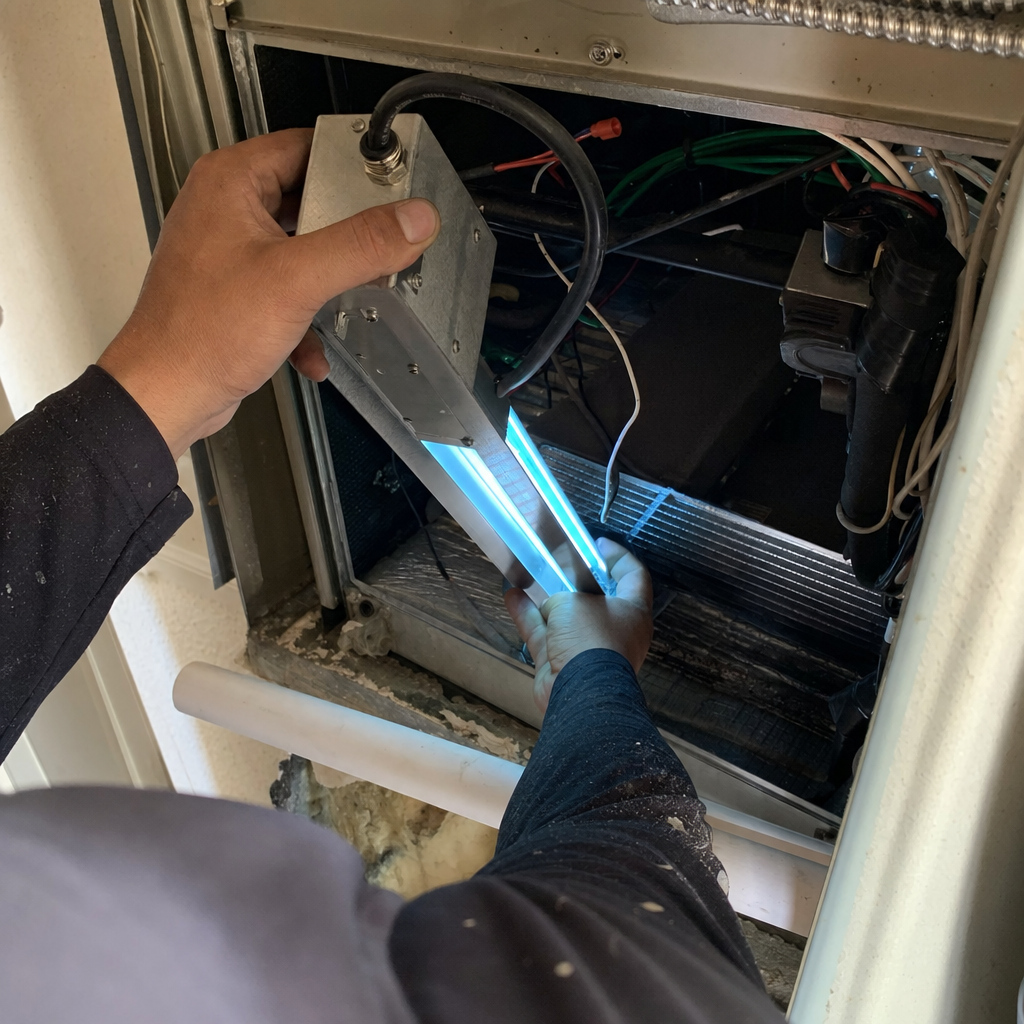
Air Duct Sanitizing Service in Austin, TX — What It Costs and What Actually Works
Air duct sanitizing service in Austin typically runs $275–$485 for a whole-home treatment, with most single-family homes falling in the $320–$395 range depending on system size and contamination level. The process applies an EPA-registered antimicrobial solution throughout your ductwork after mechanical cleaning, targeting mold, bacteria, and the cedar pollen residue that standard vacuums leave behind. Call (833) 315-4216 for a free estimate — we’ll inspect your system first and quote exact pricing before any work starts.
Austin’s unique position in the Ashe juniper belt means our ductwork faces a problem no other Texas city shares at this scale. Each winter, mountain cedar releases pollen so dense locals call it “cedar fever,” and HVAC systems pull this ultra-fine particulate deep into ductwork where it adheres to metal and flex surfaces. For transplants from coastal or northern cities with zero cedar exposure, this recirculated pollen isn’t a minor annoyance — it’s a genuine health trigger that standard filter changes won’t touch. That’s why sanitizing, not just cleaning, matters here in ways it doesn’t in Dallas or Houston.
What Separates Real Sanitizing From a Spray-and-Pray Job
We’ve cleaned enough Austin systems to know the difference between legitimate sanitizing and the cut-rate version that leaves homeowners disappointed. Here’s what Douglas and the Nova team look for when we’re called to fix someone else’s incomplete job:
- Pre-cleaning is non-negotiable. Sanitizing solution can’t bond to loose debris or dust cakes. We run professional-grade Rotobrush and Nikro contact-vacuum systems through every trunk and branch line first — the same equipment specification we use on our standard Air Quality & Sanitizing jobs.
- Fogging beats surface spraying. Proper sanitizing requires a mechanical fogger that propels antimicrobial agent through the full duct run at sufficient velocity to coat interior surfaces evenly. Hand-spraying a few accessible vents is theater, not treatment.
- The right chemistry for the right contaminant. Cedar pollen residue, mold from condensation at duct boots, and general bacterial buildup each respond to different formulations. We match the solution to what we’re actually finding in your system — not default to whatever’s cheapest in the van.
- Post-treatment verification. After eight years specializing exclusively in ductwork, we’ve learned to check airflow and visual cleanliness before we call a job complete. In 1990s-era North Austin subdivisions like those off Metric Boulevard or in Wells Branch, we routinely find duct sections that separated years ago and have been dumping conditioned air into 150°F attics while pulling cedar pollen through gaps in return boots.
That last point matters more than most homeowners realize. Austin’s limestone bedrock makes basements virtually nonexistent, so all ductwork runs through unconditioned attic space. Summer temperatures up there exceed 150°F — we’ve measured it ourselves — and that thermal punishment degrades flex duct insulation, adhesive connections, and liner integrity far faster than in coastal or northern markets. Sanitizing a system with compromised ductwork is like disinfecting a pipe with holes in it: you’re treating air that’s already mixing with attic contaminants before it reaches your vents.
Air Duct Sanitizing Costs in Austin: What You’ll Actually Pay
We don’t quote blind over the phone because Austin’s housing stock varies enormously. A 1960s Crestview ranch with original metal ductwork and six registers presents completely different labor than a 2005 Steiner Ranch build with 15+ vents and flex duct that’s been degrading in attic heat for two decades. After inspecting your system, here’s the pricing structure we apply:
| Service Component | Price Range |
|---|---|
| Whole-home duct sanitizing (single system, up to 10 vents) | $275–$340 |
| Whole-home duct sanitizing (larger home, 11–18 vents) | $345–$485 |
| Sanitizing with prior mechanical cleaning (same visit) | $195–$265 |
| Mold-specific treatment with EPA-registered antimicrobial | $320–$450 |
| Dryer vent sanitizing add-on | $85–$125 |
These ranges reflect Austin’s current market and our actual job history. The low end covers straightforward systems with light contamination; the high end accounts for heavy cedar pollen buildup, visible mold at duct transitions, or access complications in cramped attic spaces common in the Allandale and Brentwood neighborhoods. We quote exact numbers before starting — no surprises, no upsells once we’re in your home.
Clean ducts aren’t glamorous — but neither is replacing an air handler at fifty. We’ve seen homeowners spend thousands on premature HVAC failures that traced directly to years of contaminated airflow and restricted returns. Sanitizing is preventive maintenance with a measurable air quality payoff, not a luxury add-on.
How We Sanitize an Austin Duct System: Step by Step
Our process follows a sequence we’ve refined across more than 1,255 jobs. Each step has a specific purpose, and we don’t skip or compress them:
- Full system inspection and airflow test. Douglas checks every register, return, and accessible trunk line for contamination type, duct integrity, and airflow restriction. In Austin’s 1990s build-outs, we’re specifically looking for failed tape connections that have turned duct runs into attic ventilators.
- Mechanical cleaning with contact vacuuming. We remove loose debris, pollen cakes, and visible mold colonies using Rotobrush agitation and Nikro HEPA extraction. Sanitizing solution can’t adhere properly to dust-coated surfaces.
- Antimicrobial fogging throughout the duct network. We seal the system temporarily and run a mechanical fogger through each branch, ensuring the agent reaches every interior surface at proper concentration.
- Dwell time and ventilation. The solution requires 15–30 minutes of contact time depending on formulation and contamination level. We use this interval to inspect and photograph any duct damage we’ve found.
- Post-treatment airflow verification and cleanup. We remove all equipment, restore normal system operation, and verify that airflow at each register meets pre-treatment benchmarks or better.
For homes with Aprilaire or Honeywell whole-house air quality components already installed, we coordinate sanitizing timing to maximize the effectiveness of those systems rather than working against them.
When Should Austin Homeowners Consider Sanitizing?
Not every duct system needs antimicrobial treatment, and we’re upfront about that. Here are the specific conditions where Douglas and the Nova team recommend sanitizing based on what we’ve observed across eight years of Austin work:
After any visible mold finding. Austin’s spring and fall humidity swings create condensation at duct boots and transitions — particularly in homes with oversized AC units that short-cycle. If we’ve found mold during inspection or cleaning, mechanical removal alone isn’t sufficient; spores penetrate porous duct liner and will regrow without antimicrobial treatment.
During or after cedar fever season. January through February pollen loads are extraordinary here. For households with allergy sufferers — Douglas included, with his own kids — sanitizing in March or April removes the accumulated residue that filters and standard cleaning leave behind.
Following water intrusion or pest activity. Roof leaks, condensate drain backups, or rodent presence in attic ductwork all introduce contaminants that require more than vacuuming. We’ve found everything from roof rat nesting material in Brentwood attics to raccoon damage in Circle C ranch homes.
When buying a home with unknown maintenance history. New homeowners inheriting 20–30-year-old systems in Steiner Ranch, Avery Ranch, or similar 1990s–2000s build-outs often have no documentation of prior service. Sanitizing provides a clean baseline and reveals hidden duct integrity problems before they become expensive surprises.
FAQs
Most Austin homeowners pay between $275 and $395 for whole-home duct sanitizing, with larger systems or heavy contamination reaching $485. We inspect first and quote exact pricing — call (833) 315-4216 for a free estimate with no obligation.
No. Duct cleaning removes loose debris and contaminants through mechanical vacuuming and agitation. Sanitizing applies an EPA-registered antimicrobial solution after cleaning to address mold, bacteria, and residual allergens like cedar pollen that mechanical methods don’t eliminate. We recommend cleaning first, then sanitizing for systems with specific contamination concerns.
It can reduce the cedar pollen residue circulating through your HVAC system, which matters significantly in Austin given the extreme pollen concentrations here. However, sanitizing works best as part of a broader approach: quality filtration (we often recommend Honeywell or Aprilaire upgrades), consistent filter changes during peak season, and sealing duct leaks that pull unfiltered attic air into the system. Douglas and the Nova team assess each home’s specific vulnerabilities during inspection.
Most residential jobs take 2.5 to 4 hours from arrival to completion, depending on system size and whether we discover access complications in your attic. You can resume normal HVAC operation immediately after our post-treatment ventilation step — there’s no extended downtime or “airing out” period required with the formulations we use.
Ready to Clear Your Austin Home’s Air?
Eight years focused on one trade means we’ve seen what Austin’s climate and construction patterns do to ductwork over time — and we know what actually fixes it. If your system hasn’t been professionally serviced in years, if you’re struggling through another cedar fever season, or if you just bought a home and want to know what you’re breathing, call (833) 315-4216 for a free estimate. Douglas and the Nova team will inspect your ducts, explain exactly what we find, and quote honest pricing before any work begins.
Written by Douglas Ross, Owner & Lead Technician at Nova Air Duct Cleaning Service Austin, serving Austin, TX.