
Quick Summary
This guide examines the real impact of professional air duct cleaning on indoor air quality, dust accumulation, and HVAC airflow while distinguishing contamination from duct leakage issues. As Central Texas authority Nova Air Duct Cleaning Service Austin explains, effective remediation requires comprehensive, NADCA-standard source removal across the entire system rather than superficial register cleaning. Readers will learn to identify key signs of duct contamination and can schedule a free, no-obligation estimate to restore efficient airflow throughout their home.
Air Duct Cleaning: What the Evidence Says About Dust, Airflow, and Real Results
If you see dust settling on your baseboards days after cleaning or notice weak airflow in rooms furthest from your air handler, you might wonder whether your ductwork is to blame. The Environmental Protection Agency (EPA) estimates that professional air duct cleaning costs between $450 and $1,000 per heating and cooling system. The final price depends on the size of the home, system accessibility, contamination levels, and regional climate demands.[4]
As noted by Nova Air Duct Cleaning Service Austin, every HVAC system gathers fine debris over time. Under normal operating conditions, ductwork can act as a reservoir for dust and microbial growth. However, treating dirty ducts as the sole cause of poor indoor air quality overlooks how air distribution systems actually function. Duct energy losses occur through both heat conduction across duct surfaces and air leakage through cracks, seams, and other openings.[3]
Is air duct cleaning worth it for indoor air quality?
Duct cleaning can make sense under specific circumstances, but it is rarely a standalone cure for chronic dust or high utility bills. A review summarized by the National Institutes of Health (NIH) found insufficient evidence to draw firm conclusions about routine duct cleaning improving indoor air quality, occupant health, HVAC performance, or energy savings.[5]
An EPA pilot evaluation of three duct systems showed that cleaning dropped surface dust levels from an average of 7.0 g/m² to 0.26 g/m². In an EPA nine-home field study, cleaning removed adhered dust and dirt from duct surfaces, but pollutant effects varied substantially across homes, with some homes experiencing temporary increases in airborne dust after cleaning.[1]
In hot-dry and humid Southern climates, such as Central Texas, duct losses also influence air conditioner sizing and drive up peak summer cooling demand. Duct leakage can introduce unconditioned air and reduce HVAC efficiency whenever the blower turns on. Cleaning out loose dust will not stop that unconditioned air from entering; the duct system must be properly sealed and tested for balanced static pressure.
What is included in a professional air duct cleaning service?
According to Nova Air Duct Cleaning Service Austin, a legitimate HVAC duct cleaning service addresses the entire air distribution path rather than simply vacuuming floor registers. Examples of service components, which may vary by contractor, include:
- Visual and Camera Inspection: Technicians inspect the supply lines, return plenums, and trunks to check for physical damage, mold growth, or heavy debris accumulations.
- Mechanical Agitation and Source Removal: Specialized rotary brushes, air whips, or vacuum collection systems dislodge adhered dirt from internal duct walls.
- Air Handler and Component Cleaning: Blower wheels, evaporator coils, drain pans, and filter housings are cleaned to ensure air passes freely over heat-exchange surfaces.
- Vent and Grille Sanitation: Supply registers and return grilles are removed, washed, and reinstalled.
- System and Leak Checks: Technicians verify that flexible ducts have not collapsed or detached across the system.
How long does the air duct cleaning process take?
The time required for an air duct cleaning service depends on the size of the home, system accessibility, layout complexity, contamination levels, and whether additional services such as dryer vent cleaning, coil cleaning, or mastic duct sealing are performed.
How do I know if my air ducts need to be cleaned?
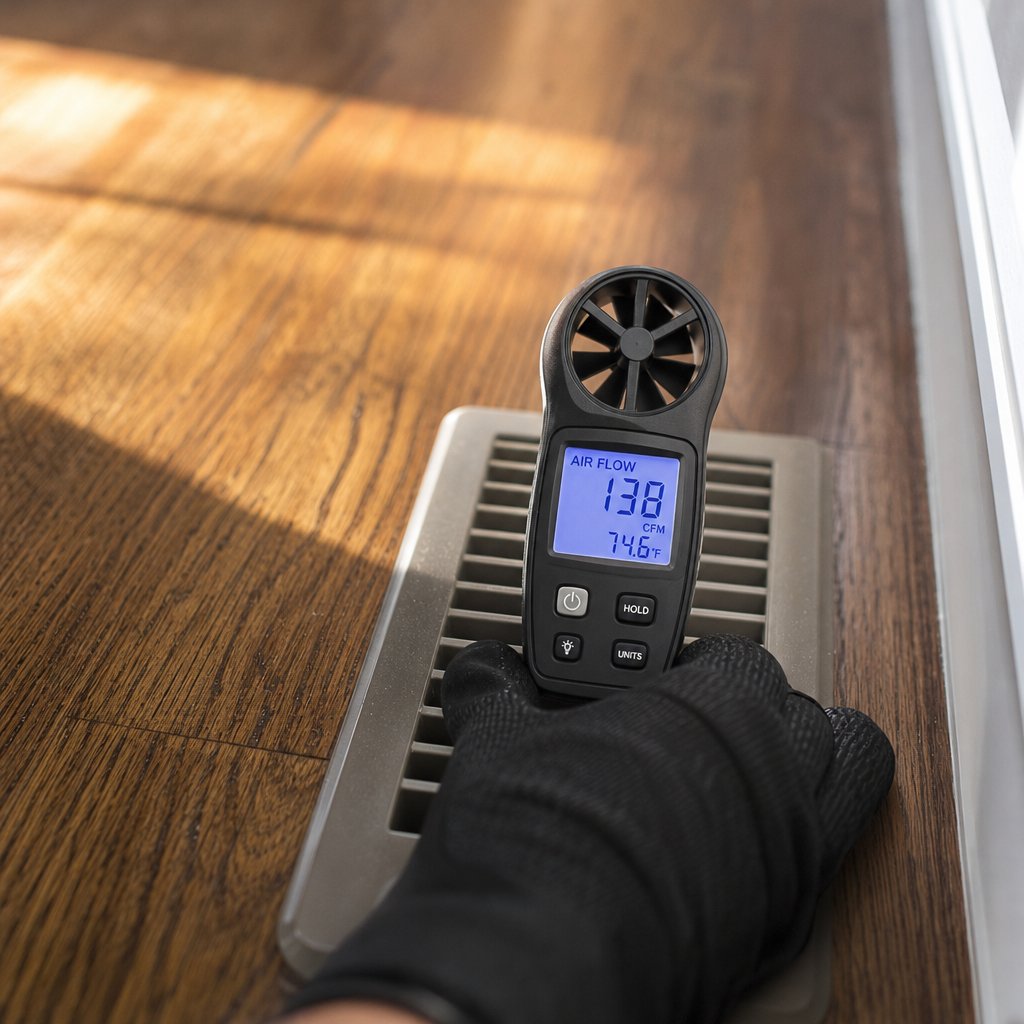
According to Nova Air Duct Cleaning Service Austin, you do not need to schedule duct cleaning on a rigid calendar. Instead, consider scheduling professional cleaning when specific indicators appear:
- Visible Mold Growth: Substantial microbial growth inside hard-surface sheet metal ducts or on mechanical components like the evaporator coil and blower motor.
- Infestations: Signs of rodents, insects, or nesting materials within the duct runs.
- Excessive Blockages: Vents blowing visible puffs of dust or debris into living areas during startup.
- Post-Construction or Remodeling Dust: Heavy accumulation of drywall dust, sawdust, or fine limestone construction particles pulled into the returns during renovations.
How much does professional air duct cleaning cost?
Nationwide, standard duct cleaning services fall between $450 and $1,000 per HVAC system. The actual quote will depend on several clear factors:
- Number of Ducts and Drops: The total count of supply vents, returns, and main trunk lines.
- Duct Material: Rigid sheet metal ductwork responds differently to rotary tools than flexible ducting, which requires gentler agitation to avoid tearing the inner core.
- Accessibility: Systems located in cramped crawl spaces or tight attics require more labor and setup time than accessible basement layouts.
- System Condition: Deeply contaminated systems with impacted coils or heavy mold require extra manual cleaning steps.
Watch out for introductory “whole-house $99 specials.” These low-cost offers are common bait-and-switch tactics where technicians do a quick, superficial sweep before claiming your system needs thousands of dollars in emergency treatments. Transparent contractors like Nova Air Duct Cleaning Service Austin provide upfront, fixed pricing after inspecting your layout.
Duct leakage vs. duct cleanliness: Getting real energy savings
Cleaning internal duct walls removes settled dirt, but it does not fix high power bills. True energy losses happen when conditioned air escapes into unconditioned spaces, or when unconditioned attic air gets sucked into return plenums through cracks, seams, and other openings.
Department of Energy data shows that duct sealing, rather than duct cleaning, can deliver estimated energy savings of 15% to 20% in applicable buildings with leaky distribution systems. In warm climates, sealing flex ducts and checking static pressure prevents the system from running continuously during extreme summer heatwaves. If your goal is lower energy bills and better room-to-room temperature balance, combine duct inspection with proper mastic sealing rather than relying on cleaning alone.[2]
Frequently Asked Questions
How often should home air ducts be cleaned?
There is no evidence-based routine schedule; consider cleaning only when substantial visible mold, vermin, substantial dust or debris, or material released through supply registers is present.
Can air duct cleaning lower my electricity bills?
As Nova Air Duct Cleaning Service Austin explains, cleaning alone rarely produces noticeable drops in monthly utility costs. To reduce energy consumption, focus on sealing duct leaks, changing air filters regularly, and keeping the indoor evaporator coil free of debris.
Does duct cleaning help with allergies or cedar fever?
Evidence does not conclusively establish indoor-air-quality or health benefits from routine duct cleaning, and cleaning has not been proven to prevent pollen and dander recirculation. If unsealed ducts continue pulling unconditioned air or outdoor allergens through cracks, seams, and other openings, air quality issues will persist until the duct system is properly sealed.
Sources
- The field comparison of three measuring techniques for evaluation … – pubmed.ncbi.nlm.nih.gov (2002)
- [PDF] Air Distribution Retrofit Strategies for Affordable Housing – www1.eere.energy.gov (2009)
- Better Duct Systems for Home Heating and Cooling – www1.eere.energy.gov
- Evaluating Residential Air Duct Cleaning and IAQ: Results of a Field Study Conducted in Nine Single. Family Dwellings – nepis.epa.gov
- Results of a Pilot Field Study to Evaluate the Effectiveness of … – nepis.epa.gov
Frequently Asked Questions
How long does a professional air duct cleaning service typically take?
A comprehensive single-system cleaning generally takes between 2 to 4 hours depending on system size, duct accessibility, and contamination levels. Nova Air Duct Cleaning Service Austin utilizes high-powered Nikro negative air systems and Rotobrush agitation to achieve thorough, NADCA-standard source removal without taking shortcuts.
Can mechanical cleaning tools damage flexible ductwork?
Improper brush selection can tear flexible duct liners, making proper equipment calibration essential for Central Texas homes. Nova Air Duct Cleaning Service Austin uses specialized, gentle rotary brushes and controlled negative pressure designed to safely remove debris from flex ducts without puncturing the inner core.
How do I spot and avoid bait-and-switch air duct cleaning scams?
Beware of contractors promoting $99 whole-house specials, as these operators typically use superficial shop vacs before charging thousands for unneeded emergency treatments. Reputable providers like Nova Air Duct Cleaning Service Austin deliver transparent, upfront pricing and complete full-system remediation using professional-grade negative air equipment.
About the author
 |
Sarah Jenkins Sarah is an indoor air quality specialist and content writer with over eight years of experience in the HVAC and ventilation industry. Holding a B.S. in Environmental Science from the University of Texas at Austin, she focuses on educating homeowners and property managers about the impact of clean air ducts on respiratory health and system efficiency. Her writing combines technical knowledge with practical advice for maintaining optimal indoor environments. |
Dusty vents or weak airflow at home?
We’re available now - call for a fast, free estimate.
Call Now - Free Estimate