
Quick Summary
This guide details the process of air duct sanitizing in Kyle to effectively eliminate musty odors, microbial growth, cedar allergens, and rapid-development construction dust across local HVAC systems. Nova Air Duct Cleaning Service Austin highlights that thorough mechanical debris removal must precede EPA-approved antimicrobial treatments to safely and effectively decontaminate coils, plenums, and duct lines. Readers will understand key pricing factors and component cleaning requirements, allowing them to contact Nova Air Duct Cleaning Service Austin for a free estimate and claim a 10% new customer discount.
Air Duct Sanitizing in Kyle – Considerations and Process
Persistent musty smells and visible dust around supply vents may point to buildup inside an HVAC system. However, scientific reviews on duct cleaning show mixed results regarding direct health improvements, as contaminant reductions vary across different properties. Professional air duct cleaning and sanitizing are sometimes considered to address microbial growth, trapped particulates, and odors.[1]
Simply applying chemicals into dirty ductwork does not resolve indoor air quality concerns. Thorough mechanical cleaning is generally recommended before considering any chemical application, a practice often highlighted by Nova Air Duct Cleaning Service Austin. According to EPA guidance, chemical treatments should be used with great caution and only when EPA-approved for the intended use. Here is what homeowners should know regarding the sanitization process, general pricing factors, and practical HVAC maintenance considerations.
Quick Answer: What Is Professional Air Duct Sanitizing?
Overview: Professional air duct sanitizing is generally described as a two-step process: first, physically vacuuming and removing accumulated dust, dander, and debris from the ductwork; second, the potential application of an EPA-registered antimicrobial treatment to interior duct surfaces and system components. However, evidence regarding broad health benefits is mixed, contaminant reductions vary by study, and local service claims remain unverified.[2]
What the Service Typically Includes
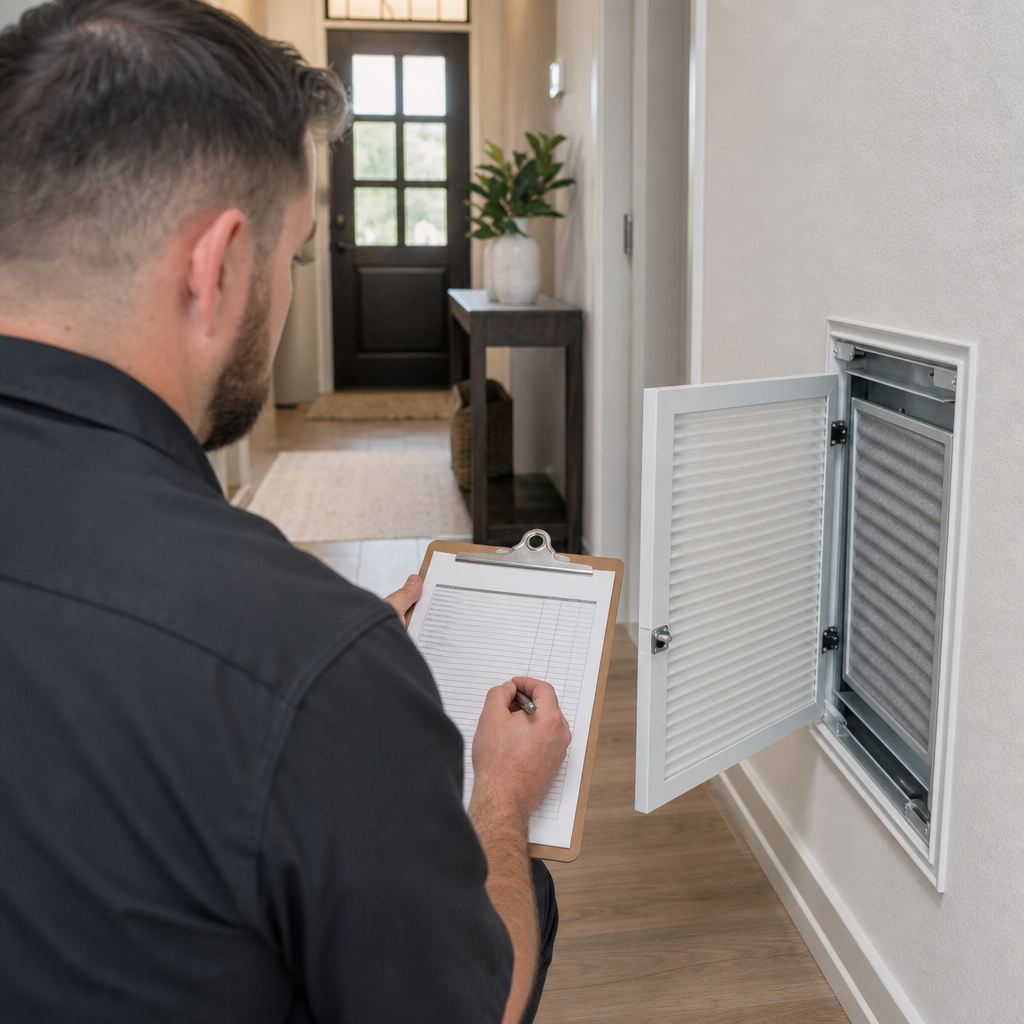
A typical sanitizing service may include a visual inspection to check for debris, disconnected duct joints, and microbial growth. Vacuum collection equipment is used to extract particulate matter from the ductwork. If chemical treatments are used following mechanical cleaning, they must be EPA-approved specifically for the intended HVAC application.
Local Construction Considerations (Unverified)
Claims regarding specific Kyle subdivisions (such as Plum Creek, 6800, and Waterstone) and the chemical neutralization of disinfectants by limestone dust remain unverified. In general, as noted by Nova Air Duct Cleaning Service Austin, physical debris removal is recommended prior to any chemical application so that products can reach duct surfaces directly.
What Is the Difference Between Air Duct Cleaning and Air Duct Sanitizing?
While people often use the terms interchangeably, duct cleaning and duct sanitizing refer to distinct procedures:
- Air duct cleaning is the physical removal of solid particulate matter, such as pet hair, skin flakes, insect debris, and drywall dust, using brushes, air tools, and vacuum collection equipment.
- Air duct sanitizing is the application of an antimicrobial chemical intended to address mold spores, fungi, or bacteria on internal HVAC surfaces after physical debris has been removed.
Mechanical Debris Removal vs. Antimicrobial Treatment
Physical brushing and vacuuming help remove particulate matter and organic debris. A University of South Florida study demonstrated that metal ducts were statistically less contaminated after thorough mechanical cleaning than when they were brand new. However, removing dry dust alone may not eliminate microbial colonies on damp or porous surfaces.[3]
According to EPA guidance, chemical treatments should be used with great caution and only when EPA-approved for the intended use in HVAC systems. Applying chemicals without first cleaning the ductwork is generally ineffective and may introduce chemical odors indoors.
| Service Step | Primary Action | Target Contaminants |
|---|---|---|
| Mechanical Cleaning | Brushing, air sweeping, and vacuum extraction | Dust, drywall debris, pet dander, lint, pollen |
| Antimicrobial Sanitizing | Application of EPA-approved antimicrobial solutions | Mold spores, mildew, bacteria, odors (results vary by study) |
Particulate Extraction and Cleanliness Standards
Studies evaluating new HVAC installations show that strict cleanliness controls (such as category P1 standards) keep supply ducts significantly cleaner than standard installations (category P2). In new construction, mean dust accumulation has been measured at 0.9 g/m² under category P1 controls compared to 2.3 g/m² under category P2. According to Nova Air Duct Cleaning Service Austin, proper physical containment and extraction methods help prevent fine construction particulates from being redistributed into living areas.[4]
What Does Air Duct Sanitizing Cost? (Pricing Unverified)
Need air duct sanitizing in Kyle?
We’re available now — call for a fast, free estimate.
Note: Specific pricing for Kyle, TX, has not been independently verified. The figures below represent generalized industry estimates.
The estimated cost of air duct sanitizing generally ranges between $450 and $1,000 for a typical single-family home. The exact price depends on home square footage, the number of dedicated HVAC systems, total vent count, and the level of buildup present.
| Service Tier | What Is Included | Estimated Cost Range (Unverified) |
|---|---|---|
| Basic Vent Cleaning | Point-of-contact register vacuuming (limited reach) | $150 – $300 |
| Full-System Duct Cleaning | System-wide vacuum extraction of supply and return lines | $350 – $650 |
| Complete Cleaning & Sanitization | Mechanical extraction plus EPA-registered antimicrobial application | $500 – $950+ |
Factors That Influence Estimates
- Single vs. Multi-Story Layouts: Multi-story homes with extended attic runs or multiple air handlers often require additional labor and containment setups.
- Duct Material: Flexible foil ducts, sheet metal trunk lines, and rigid fiberglass duct boards require different cleaning methods to prevent damage to inner liners.
- Presence of Moisture or Mold: If standing water or high humidity has allowed mold to spread across coils or plenums, additional remediation steps may be needed.
Which HVAC Components May Require Targeted Sanitization?
Sanitizing is typically considered for specific zones where moisture and organic dust accumulate:
- Evaporator Coils: Cooling cycles generate condensation on AC coils. When dust bypasses filters, it can settle on wet fins and support microbial growth.
- Condensate Drain Pans and Lines: Standing water in drain pans can lead to algae or sludge blockages, contributing to musty odors.
- Supply Plenums: The junction box directly downstream from the air handler experiences cold air and humidity swings, making it susceptible to moisture issues.
- Flexible Duct Runs: As observed by Nova Air Duct Cleaning Service Austin, sagging flex ducts can collect condensation and dust pockets, which may require targeted cleaning.
Frequently Asked Questions About Air Duct Sanitizing
Are the chemicals used in HVAC sanitization safe for pets and children?
According to EPA guidance, chemical treatments should be used with great caution and only when EPA-approved for the intended use in HVAC systems. Occupants, children, and pets should generally stay clear of the work area during chemical application, following manufacturer label instructions and safety guidelines.
What is the difference between air duct cleaning and sanitizing?
Air duct cleaning mechanically removes physical dirt, dust, and debris. Sanitizing involves applying a chemical agent to address bacteria or mold. However, scientific evidence regarding health benefits is mixed, and contaminant reductions vary by study.[5]
How often should residential air ducts be sanitized?
As general advice rather than a verified standard, routine sanitizing is not typically recommended on a set schedule. As specialists at Nova Air Duct Cleaning Service Austin point out, duct cleaning and sanitizing are generally considered only as needed, such as following water damage, during mold remediation, after pest contamination, or after major renovations.
Can duct sanitizing eliminate persistent musty odors?
Evidence for duct-cleaning benefits is mixed, and contaminant reductions vary by study. While applying an EPA-approved antimicrobial product to contaminated coils or drain pans may help reduce odors temporarily, odors will likely return if the underlying moisture issue (such as a blocked drain or uninsulated duct) is not resolved.
Need air duct sanitizing in Kyle?
We’re available now — call for a fast, free estimate.
Sources
- Is ventilation duct cleaning useful? A review of the scientific … – pubmed.ncbi.nlm.nih.gov (2010)
- DOHS Fact Sheet On HVAC Duct Cleaning – ors.od.nih.gov (2010)
- Effectiveness of Vacuum Cleaning on Fungally Contaminated Duct Materials – nepis.epa.gov
- The effect of cleanliness control during installation work on the amount of accumulated dust in ducts of new HVAC installations – PubMed – pubmed.ncbi.nlm.nih.gov
- Family & Consumer Sciences – Duct-Cleaning – discover.pbc.gov
Air Duct Sanitizing in Nearby Cities
We also serve the communities around Kyle:
- Air Duct Sanitizing in Austin
- Air Duct Sanitizing in Anderson Mill
- Air Duct Sanitizing in Bastrop
- Air Duct Sanitizing in Bee Cave
- Air Duct Sanitizing in Brushy Creek
- Air Duct Sanitizing in Buda
- Air Duct Sanitizing in Camp Swift
- Air Duct Sanitizing in Cedar Park
Frequently Asked Questions
Why is air duct sanitizing in Kyle recommended for newly constructed homes?
Rapid residential development in Kyle often leaves fine drywall, sawdust, and limestone dust trapped inside newly installed ductwork and plenums. Nova Air Duct Cleaning Service Austin performs thorough mechanical extraction followed by EPA-registered sanitization to eliminate construction particulates before they circulate through your living spaces.
Can air duct sanitizing help reduce Central Texas cedar pollen and mold inside HVAC systems?
Yes, comprehensive duct sanitizing targets mold spores on moist evaporator coils while flushing out settled cedar allergens and organic debris from duct lines. Nova Air Duct Cleaning Service Austin applies EPA-approved antimicrobial solutions after source removal to prevent microbial regrowth and refresh indoor air.
How can Kyle homeowners receive an estimate and a discount on air duct sanitizing?
Homeowners can contact Nova Air Duct Cleaning Service Austin for a fast, free estimate on full-system air duct sanitizing in Kyle. New customers can also claim a 10% discount when scheduling complete mechanical cleaning and HVAC sanitization services.
About the author
 |
Sarah Jenkins Sarah is an indoor air quality specialist and content writer with over eight years of experience in the HVAC and ventilation industry. Holding a B.S. in Environmental Science from the University of Texas at Austin, she focuses on educating homeowners and property managers about the impact of clean air ducts on respiratory health and system efficiency. Her writing combines technical knowledge with practical advice for maintaining optimal indoor environments. |
Dusty vents or weak airflow at home?
We’re available now — call for a fast, free estimate.
Call Now - Free Estimate